Commercial cleaning and food hygiene professionals in Brampton support restaurants, commissaries, baking facilities, warehouses, and mobile food services staying compliant. They decontaminate regularly touched surfaces, food preparation surfaces, equipment, floors, drains, restrooms, and prep zones using certified products, at correct dilution, and recording exposure duration. You require regular sanitation determined by hazard level, food throughput, food allergies, and regulatory assessments, plus documented proof backing Hazard Analysis Critical Control Points, quality reviews, and public health compliance. The following information outlines how effective cleaning systems must contain.
Key Takeaways
- Sanitation technicians in Brampton support restaurants, grocery departments, commissaries, warehouses, bakeries, schools, mobile vendors, and allergen-sensitive operations.
- Cross-contamination reduction is achieved by cleaning frequently contacted areas, food-contact equipment, kitchens, floors, drains, restrooms, and storage areas with zone-based workflows.
- Certified vendors check approved sanitizer dilution, compatibility, and exposure duration, then log completion with checks, inspections, and corrective-action records.
- Regular, periodic, and periodic operations designated by location constitute cleaning plans based on danger, output capacity, format changes, releases, and regulations.
- Suppliers must possess HACCP, sanitation knowledge, WHMIS preparation, protection, references, color-categorized implements, and audit-ready hygiene paperwork.
What Brampton Facilities Require Food Safety Cleaning?
Any Brampton facility that handles, stores, prepares, packages, or serves food needs food safety cleaning. You must follow it if your facility falls under public health inspection, food premises regulations, or internal HACCP-based controls. That requirement covers eateries, dining facilities, food distribution centers, supermarket departments, meat markets, fish counters, corner stores, and commercial kitchens.
You also need documented food sanitation in supply warehouses, manufacturing facilities, refrigerated storage, bakeries, school feeding programs, reception facilities, and delivery centers. Portable and seasonal businesses count too, including food trucks, event vendors, and temporary booths. If your staff handle ingredients, section prepared foods, heat finished items, or keep allergens stored, your facility needs recorded sanitation procedures. In Brampton, hygiene isn't elective; it's part of legal, operational, and consumer protection compliance.
What Do Brampton Cleaning Professionals Handle?
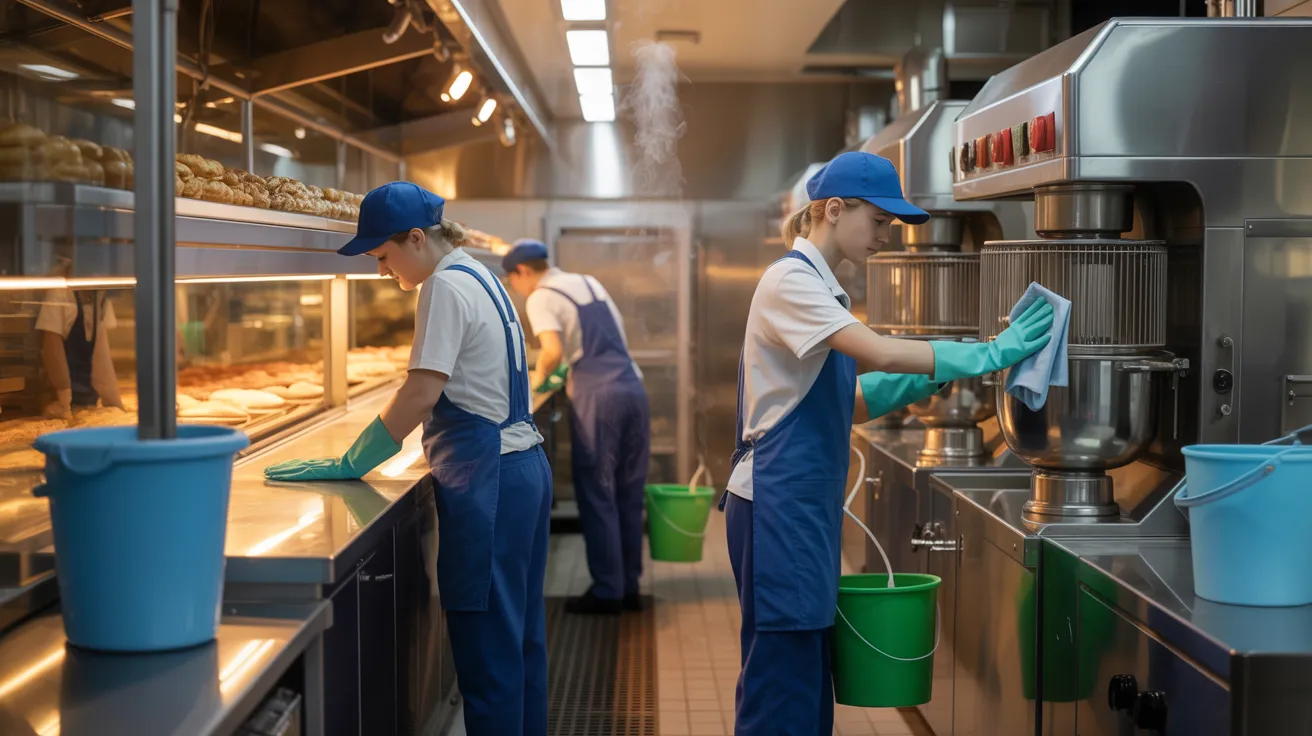
You need skilled cleaning experts who sanitize frequently touched areas, cooking areas, floor areas, and bathrooms to maintain food safety and public health requirements. These locations are prioritized because they carry the greatest contamination risk, falling hazards, and health code violations.
When you understand what they clean, you can ensure your operation's cleaning procedures satisfy compliance and operational standards.
Sterilizing High-Touch Points
structure disinfection schedules considering activity levels, infection risk, and how the space is used.
By rotating cleaning materials, maintaining directional cleaning methods, and organizing sanitization equipment by location, you ensure a quantifiable, defensible, and ready for inspection sanitation protocol.
Cooking Zones, Walking Surfaces, and Restroom Environments
Expect Brampton cleaning experts to target kitchens, floors, and restrooms because each area carries distinct foodborne illness prevention, slip-and-fall, and sanitation risks. In industrial kitchens, you need degreasing on cook lines, equipment exteriors, drains, prep surfaces, and splash zones to minimize bacterial growth and pest activity.
Floor care that is recorded should also be anticipated. Technicians clean and remove buildup from grout, tile, and vinyl flooring, then apply proper moisture management so you can limit falls and meet regulatory standards. They also address entryways where moisture and debris migrate indoors.
For restroom sanitation, cleaners disinfect touchpoints, fixtures, partitions, dispensers, and waste containers, then replace products and reduce odor. They also service restaurant moprooms, where chemical storage, sink hygiene, and drainage conditions can affect sanitation compliance and staff safety daily.
Why Food Safety Cleaning Matters in Brampton
To adhere to health code requirements and succeed in audits, Brampton facilities must maintain food-safe cleaning standards. You also minimize bacterial spread through proper cleaning of food-preparation surfaces, appliances, and frequently-touched items. Most importantly, you safeguard public health by lowering the risk of foodborne illness in your facility.
Food Safety Regulations
Food establishments in Brampton face mandatory safety protocols, making food safety cleaning critical to adhering to health code requirements, safeguarding patrons, and eliminating enforcement action. You must maintain clean food preparation areas, verifiable cleaning logs, correct sanitizer application, and verifiable staff procedures that meet municipal and provincial inspection expectations.
When cleaning standards slip, notices, corrective orders, reputation damage, and service interruption from additional reviews or enforcement reviews become risks.
Cross-Contamination Prevention
Maintaining regulatory compliance copyrights on your power to stop cross-contamination during daily food handling and cleaning. You must separate raw ingredients from ready-to-eat foods, sterilize work zones between assignments, and store chemicals away from food-contact items. Explicit protocols lower contamination threats and reinforce steady regulatory adherence.
Implementing allergen segregation helps ensure major allergens don't touch shared surfaces, containers, or equipment. Deploy dedicated cutting boards, color-coded tools, and clear tool marking so staff don't mix items while preparing or distributing. Require handwashing after handling raw meat, seafood, eggs, or allergen-containing products. Refresh cleaning cloths often, and validate disinfectant levels using test strips. When your team learns these guidelines every shift, you establish a more hygienic, safer workplace that satisfies Brampton's food safety needs regularly.
Community Health Safety
Should cleaning standards collapse, you don't simply encounter inspection problems—you increase the potential of contamination-related sickness impacting customers, staff, and the wider Brampton population. You also weaken your role in protecting public health, especially in high-traffic food premises where pathogens travel quickly through surfaces, equipment, and touchpoints.
You depend on cleaning procedures that eliminate contaminants, properly disinfect, and verify results. This entails adhering to contact periods, deploying approved disinfectants, maintaining records, and training employees to fulfill health-unit expectations. These actions support pathogen control by suppressing pathogens before affecting food surfaces or hands. In Brampton, robust sanitation protects at-risk groups, curtails outbreak likelihood, and proves your diligence. When you adhere to proper protocols, you exceed requirements—you meaningfully lower danger and advance safer food handling across the region.
How Can Cleaning Practices Ensure Food Safety Compliance?
Upholding rigorous cleaning routines backs food safety compliance by reducing contamination risks, controlling pathogen growth, and keeping your facility aligned with sanitation requirements under HACCP-based programs and public health regulations. You confirm that food-handling surfaces stay visibly clean and microbiologically controlled, facilitating documented preventive controls and inspection readiness.
Cleaning programs additionally fortify allergen management by extracting residues that can cause undeclared allergen exposure.
How Do You Arrange Commercial Cleaning Services?
cleaning routines or between production runs wherever surfaces contacting food, washrooms, and high-touch areas
facility closures, seasonal soil buildup, or times of elevated pest pressure. When your facility conducts special occasions, catering functions, or public functions, schedule cleaning right before and after for successful event turnaround
How Do You Choose Brampton Cleaning Experts?
Screen providers initially by their food hygiene standards—not budget alone. You need to confirm that every company meets CFIA, public health, and HACCP-aligned expectations for your operation. Demand proof of insurance, WHMIS compliance, training records, and management systems. Evaluate technician understanding of contamination dangers, chemical safety, and documented sanitation practices.
You must also evaluate business consistency and accountability. Seek references from food facilities in Brampton, then assess response speed, corrective-action procedures, and communication quality. Ensure the company supports supplier audits and can provide inspection-compliant records when authorities or third parties demand verification. Verify equipment is maintained, colour-coded tools are deployed correctly, and operational-specific risks are understood. A reputable service protects compliance, product integrity, and your market standing.
What's included in a sanitation cleaning strategy?
Establish a documented program that establishes every sanitation task, standard, and responsibility before production begins. You should list cleaning frequencies, approved chemicals, dilution rates, contact times, tools, and verification methods for each zone, surface, and piece of equipment. Make sure to include pre-operational inspections, corrective actions, and employee training requirements.
Your strategy should also address cross-contamination controls, waste handling, pest-prevention measures, and documented schedules for restrooms, drains, floors, and food-contact areas. Describe how you'll separate raw and ready-to-eat processes, facilitate ingredient tracking, and ensure accurate allergen labeling through validated cleaning between product changes. You should set accountability, keep signed records, and assess results against regulatory standards, HACCP controls, and customer requirements. When gaps appear, modify procedures immediately and instruct staff.
Commonly Requested Inquiries
Do sanitation providers operate during overnight shifts at Brampton properties?
Yes, you can book sanitation coverage to accommodate nighttime operations in Brampton facilities. You'll coordinate nighttime cleaning around production schedules, security protocols, and personnel needs. Services typically establish overnight logistics to minimize disruption, maintain standards, and track completed work. You should verify response times, supervision, access procedures, and waste management before starting service.
Are emergency spill response services available from sanitation professionals?
Yes, you can locate Brampton sanitation experts providing spill response options. They handle hazardous incidents, evaluate risks, isolate contamination, and initiate rapid cleanup to minimize exposure and avoid operational impact. You should verify response rates, credentials, PPE measures, and disposal methods. If your facility must meet compliance standards, select a service that documents events, follows procedures, and ensures audit compliance.
Do green disinfectants work safely on surfaces contacting food?
Absolutely, green disinfectants can be safe for surfaces contacting food when you opt for solutions certified for food use and complying with regulations. You must verify contact times, mixing proportions, and rinse requirements prior to application. Natural-based solutions reduce harsh chemical exposure, though you require evidence of effectiveness against relevant pathogens. For keeping surfaces residue-free, implement manufacturer instructions exactly and verify your cleaning agent adheres to food industry regulations.
Will maintenance plans adapt to seasonal production changes?
Absolutely, maintenance plans allow customization for seasonal variations. Adjust timing, labor allocation, sanitizers, and validation steps to fit operational cycles while preserving regulatory compliance. Lower production downtime through timing sanitization around production shifts, high demand periods, and equipment use patterns. Also revise standard operating procedures, staff education, and monitoring protocols to account for temporary risks, emerging allergens, or increased soil loads. Periodic assessments preserve the schedule functional.
Do professional cleaners coach staff members in proper hygiene techniques?
Certainly, commercial cleaners train your employees on sanitation best practices. You secure staff training on correct chemical practices, processing times, contamination control, equipment disassembly, and documentation. They typically align instruction with HACCP, GMP, and CFIA or local public health standards. Many also run sanitation audits to verify compliance, uncover shortcomings, and strengthen corrective measures. This helps you copyright standard processes, pass inspections, and reduce food safety risks every day.
Final Thoughts
Partnering with Brampton food safety and commercial cleaning experts means more than complete information cleaning—it ensures your facility stays inspection-compliant and your protocols remain compliant. From kitchen areas to production zones, each cleaned area and organized section lessens contamination risk and avoids costly disruptions. By arranging service on appropriate schedules and implementing a thorough cleaning program, you shield your workforce, your customers, and your reputation. In a heavily regulated sector, sanitary conditions are non-negotiable—they're vital to proper management.